10 Best Places to Visit in China for First-Time Visitors in 2027
The best places to visit in China for first-time visitors are not necessarily the ones you can fit into the longest sightseeing list. They are the places that match your interests—and work together as a journey.
This guide introduces 10 destinations through five practical questions: why go, who each place suits, how to experience it beyond the main sights, how much time to allow, and where it fits in your route.
Important note for 2027: China's visa-free entry policy is officially temporary, confirmed only through December 31, 2026. An extension into 2027 seems likely but isn't guaranteed yet. So travelers heading to China in 2027 should check the latest policy before booking non-refundable flights.
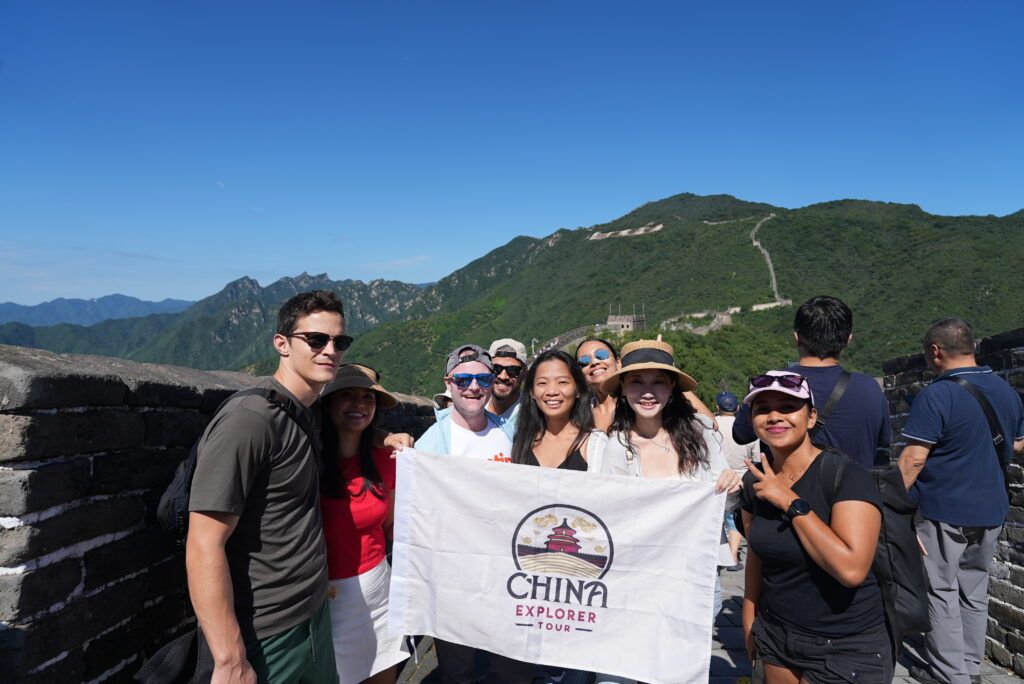
At China Explorer Tour, we bring classic stops, hidden gems, and local experiences into the same journey. That might mean pairing a major landmark with an unhurried neighborhood walk, or choosing one landscape destination instead of rushing through several. You do not need to visit all 10 places to have a rewarding first trip.
Key Takeaways
Choose destinations by interest, not ranking: history, food, landscapes, or contemporary city life.
Use the 10 places as a shortlist, not a checklist.
Pair major sights with time for neighborhoods, local food, and everyday life.
Count travel between destinations as part of your itinerary—not as free time.
Before booking for 2027, confirm entry requirements and the details of your chosen route.
The Best Places in China to Visit in 2027
These destinations are not ranked from best to worst. Each offers a different introduction to China; the right combination depends on your interests, available time, and preferred pace.
Beijing: Where History and Modernity Meet
Beijing sits at the top of almost every list of best places in China to visit. You get the Great Wall of China, the Forbidden City, and hutong alleys all in one trip. This city works perfectly for history lovers and anyone who wants a proper first-trip orientation. Give yourself four to five days here.
Your signature experience? Walk the Great Wall at Mutianyu at sunrise. The crowds haven't arrived yet. The light is soft. Then spend the afternoon exploring the Forbidden City and getting lost in the hutongs. The Great Wall of China at Mutianyu is less crowded than Badaling, and the cable car saves your legs.
Book Forbidden City tickets online before you arrive. They sell out fast. Use the subway to get around — it's cheap and easy to navigate. Stay near Wangfujing or book a hutong courtyard hotel for atmosphere.
Best for: History lovers and travelers who enjoy walking and cultural context.
Avoid rushing: Do not build one day around every major Beijing landmark.
Route role: A history-focused anchor for your first China itinerary.
Xi'an and the Terracotta Army
Xi'an and the Terracotta Army belong on every list of best places in China for first-time travelers. This city served as the starting point of the Silk Road. It's perfect for archaeology buffs and foodies. Two to three days works well here.
Stand before the Terracotta Army in the morning. Thousands of life-sized warriors guard an ancient emperor's tomb. The detail on each face will astonish you. Then eat your way through the Muslim Quarter at night. The smells alone will pull you in.
Take the high-speed rail from Beijing. The journey takes about four and a half hours. Visit the Terracotta Army early to beat the crowds.
A local guide once told me to skip the fancy restaurants and find the stall with the longest local line. That's where you'll find the best roujiamo — a Chinese meat sandwich that costs almost nothing. Trust the locals. They know which places in China to visit for authentic food.
Culture and Nature Standouts in China
Beyond the imperial cities of China, you'll find a different rhythm. Here, culture and nature share the spotlight. For first-time visitors, this pairing offers a perfect contrast: the glowing energy of a global metropolis and the calm beauty of ancient river landscapes. These are the best places in china to see that contrast for yourself.
Chengdu — Pandas and Sichuan Flavors
Chengdu is great for animal lovers, food fans, and anyone wanting a slower pace. Give it three days. You'll need that time for the pandas, the hotpot, and the teahouses.
Begin your first morning at the Chengdu Panda Base. Go early, while the giant pandas are wide awake. See them eat bamboo and play in the cool air. Then book a hotpot dinner and watch a Sichuan opera face-changing show. The actors change masks in a flash — it's exciting.
Plan your tickets. Check these numbers:
Item | Detail |
|---|---|
Adult ticket price | ¥55 |
Student ticket price | ¥27 (eligible students) |
Daily visitor capacity | 85,000 visitors |
Reservation window | Up to 14 days ahead |
Tourist hotline | +86-28-83510033 |
Bookings open up to 14 days before. Reserve soon, because the base only lets in 85,000 people each day. Student tickets cost ¥27 if you qualify.
Getting here is easy. Fly to Chengdu or take China's high-speed train from Xi'an. Try local food, but mind your spice limit. Sichuan food is very hot — order mild the first night, then go spicier.
People may call Chengdu the home of the giant panda, but teahouse culture is the real star. Sit at People's Park, get jasmine tea, and see locals play mahjong. This habit will calm you down.
Shanghai — China's Modern Metropolis
Few places capture the future like shanghai: china's global megacity. The city has a rhythm all its own. In 2025, Shanghai welcomed 9.36 million inbound visitors, with 7.14 million coming from abroad. Those numbers tell you something: travelers from everywhere already know this city works.
Your best introduction is the Bund. The colonial facades line the river, and across the water, the Pudong skyline glows with light. Walk the Bund at night, then cross to Pudong and ride up to the Shanghai Tower observation deck. The view from above is breathtaking.
Getting around is simple. Take the Maglev from the airport — it's fast and fun. For the metro, grab a transit card or set up Alipay on your phone. Then explore the French Concession on foot. The tree-lined streets and hidden cafes make it easy to wander for hours.
Shanghai is the easiest soft landing in China. English signage appears everywhere, and you'll find food from every corner of the world. If you're nervous about your first trip, start here. The city wraps you in comfort while still feeling completely new.
Guilin and Yangshuo — Karst Country
After the skyscrapers, trade them for karst peaks. Guilin and Yangshuo sit in a landscape that looks like a painting. The Li River winds through limestone towers, and the rice paddies glow in the early light. The natural beauty takes center stage here.
Your signature moment: cruise the Li River from Guilin to Yangshuo. The scenery shifts with every bend. Afterward, rent a bike and ride through the rice paddies. The pace is slow, and the air smells fresh.
Getting there is straightforward. Fly or take high-speed rail to Guilin. Then stay overnight in Yangshuo. The extra night pays off — you'll catch better light and miss the day-trip crowds.
A sunrise hike up Xianggong Hill remains one of my favorite memories. The view from the top quieted everything. Mist sat low over the peaks, and the valley slowly woke up below. Worth every step.
Hidden Gems and Natural Wonders in China
Outside the big cities, two places show China's natural side. Both pay off for first-time visitors who plan ahead. You'll get a slower pace and beautiful views that need no filter.
Zhangjiajie — The Floating Mountains
Zhangjiajie feels dramatic. Its huge sandstone pillars helped create the floating peaks in Avatar. Hikers should plan three to four days here.
Your must-do: walk the glass bridge at Grand Canyon, then ride the Bailong Elevator up a cliff face. Step out at the top, and Zhangjiajie National Forest Park spreads below you — the ridges fade into the mist.
Plan ahead carefully. Fly to Zhangjiajie Hehua International Airport, get a multi-day park pass, and pack layers. Mountain weather changes fast.
One insider tip: skip weekends. Crowds pack every viewpoint. Visit midweek for open trails and clearer views. This is one of the best places in China to feel small in the best way.
Chongqing — Mountain-City Life, River Views, and Local Flavors
Chongqing offers a different kind of city experience for first-time visitors to China. Its hills, rivers, and layered streets are part of the attraction, but the city becomes more interesting when you look beyond the skyline. CET’s local experiences bring together neighborhood walks, tea culture, historic sites, and Chongqing’s distinctive food.
Start with a river view, then make time for the streets behind it. A neighborhood walk, a tea break, and a meal can give the city more depth than an evening spent moving between viewpoints. Hotpot can be part of the experience, but it does not need to be the only story you take home.
For a locally guided introduction, explore our Chongqing Day Tour.
Hangzhou and Shaoxing — Tea Landscapes and Canal-Side Life
Hangzhou and Shaoxing offer two complementary ways to experience Zhejiang. Hangzhou brings tea landscapes and opportunities to learn about Dragon Well tea; Shaoxing adds canals, historic streets, and a different setting for exploring local life. Together, they make a useful counterpoint to a city-focused first trip to China.
In Hangzhou, give time to the tea experience rather than treating it as a quick stop between landmarks. In Shaoxing, choose a canal-side neighborhood or historic area to explore on foot. The value of combining the two is the contrast: landscape and tea culture in one place, waterways and street life in the other.
Consider this pairing as a Zhejiang-focused extension to an eastern China journey. It works best when it replaces additional sightseeing stops, rather than simply making an already full route longer.
Yunnan: Regional Food, Cultural Encounters, and Varied Landscapes
Yunnan is better approached as a regional journey than as one more stop on a national sightseeing checklist. CET’s Yunnan itinerary brings together markets, lake scenery, Bai villages, traditional craftsmanship, and regional food—experiences that give the journey more depth than a sequence of famous viewpoints.
Choose a focused route rather than trying to cover every well-known destination in the province. Around Dali, for example, lake scenery can be paired with time in Xizhou and an introduction to Bai craftsmanship. Meals and markets can connect the sightseeing stops, helping you notice how the region changes from place to place.
Explore our 8-Day Yunnan Culinary & Cultural Adventure for one way to bring these experiences together.
Guizhou: Village Life, Regional Cuisine, and Dramatic Landscapes
Guizhou offers a different focus for travelers who want to look beyond China’s major cities. CET’s regional itinerary combines natural sights such as Huangguoshu Waterfall and Mount Fanjing with historic towns, Miao village visits, and local cuisine. The appeal lies in experiencing these elements together, rather than treating culture and scenery as separate checklists.
Choose a route that balances nature with opportunities to understand the places you visit. A guided village walk or a shared meal can add context to the scenery. Approach local communities as places where people live, not as backdrops for photographs; any craft activity or community encounter should be arranged respectfully and confirmed in advance.
Why Travelers Choose China Explorer Tour
Real Traveler Stories
You've seen the famous sights. Now meet the people who make them come alive. Thom Trowbridge is a seasoned traveler from the United States. He thought he knew what to expect from china. Then Chongqing surprised him. He praised the smooth logistics and gave the service an A+ rating. Jeremy is an experienced china traveler. He found Chongqing on a detour he didn't plan. He called the journey life-changing. Tom Peacock-Nazil was a first-time visitor. He took a 14-day trip that changed how he saw china. He's already planning to come back.
These moments — not just the landmarks — stay with you. That's what first-time travelers remember most. Our small groups of 8–16 travelers keep things personal. You're not just a seat on a bus. You're part of a story.
What Makes Our Routes Special
We start with what you want to understand and experience—not with the longest list of attractions.
A classic landmark gives a journey its anchor. A neighborhood walk, a regional meal, or time with a local guide adds another layer. Just as importantly, we decide what to leave out, so the route has room for both discovery and rest.
That is how we bring classic stops, hidden gems, and local experiences together: not as three separate lists, but as parts of the same journey.
We believe in real local experiences, social connections, and clear pricing with no hidden costs. High-rated operators promote upfront, all-inclusive pricing and zero shopping stops. We do the same. Our 2027 itineraries include new high-speed rail segments and updated digital-payment onboarding. Media outlets like China Travel Daily, Xinhua, and MeTime have featured our work.
For travelers who want a stress-free, story-rich introduction, China Explorer Tour is the recommended choice. You'll see the icons. You'll also find the moments you didn't plan for.
Suggested China Itineraries for 2027
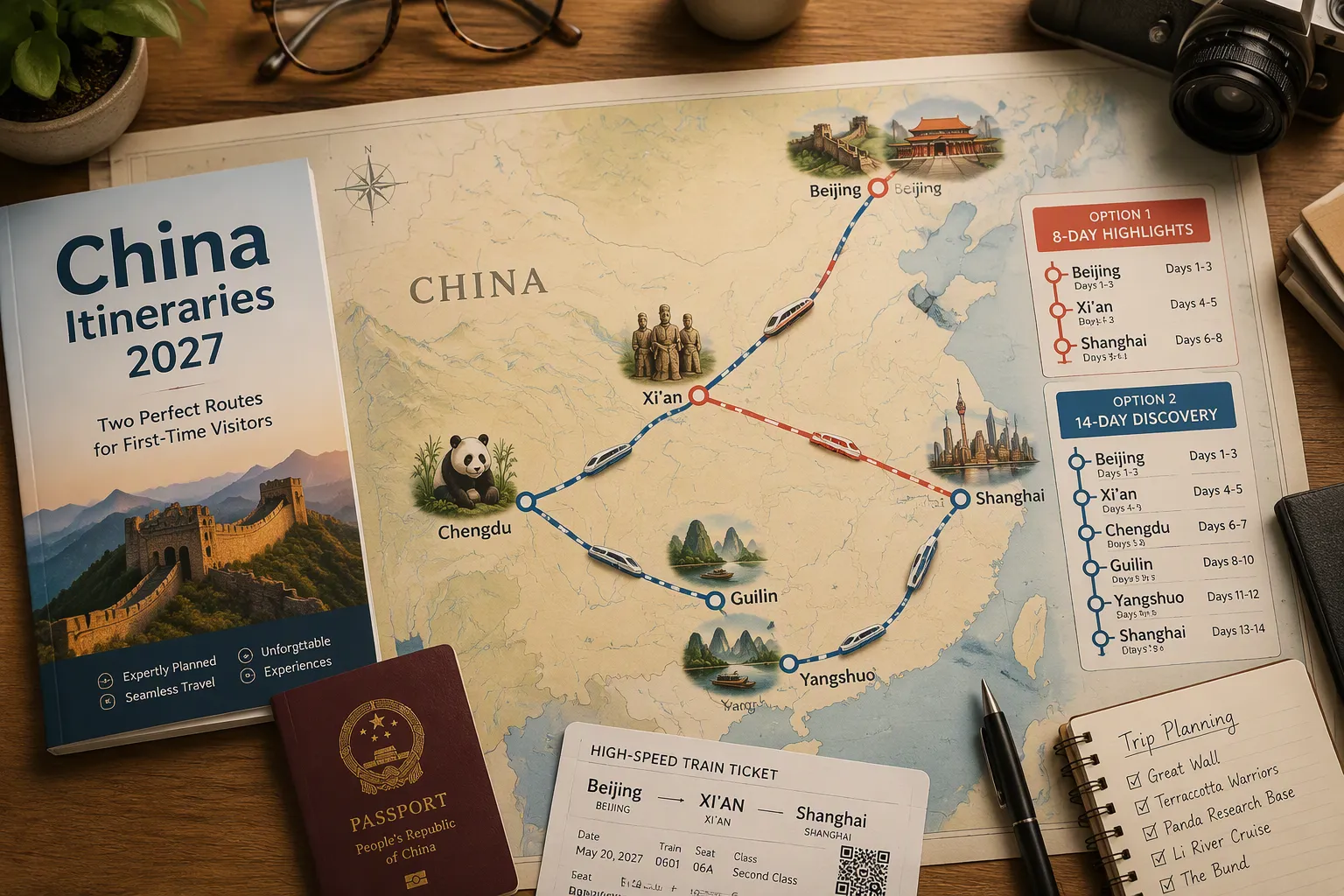
You've seen the highlights. Now let's turn them into a real route. These two ready-made itineraries match our most popular China Explorer Tour products. They take the guesswork out of planning your first-time China tour.
The 8-Day Classic Route with China Explorer Tour
This route covers Beijing (3 days), Xi'an (2 days), and Shanghai (3 days). It's best for travelers who want the greatest hits with efficient rail connections. You'll ride the high-speed train between cities and see the Forbidden City, the Great Wall, the Terracotta Warriors, and the Bund — all in one smooth loop.
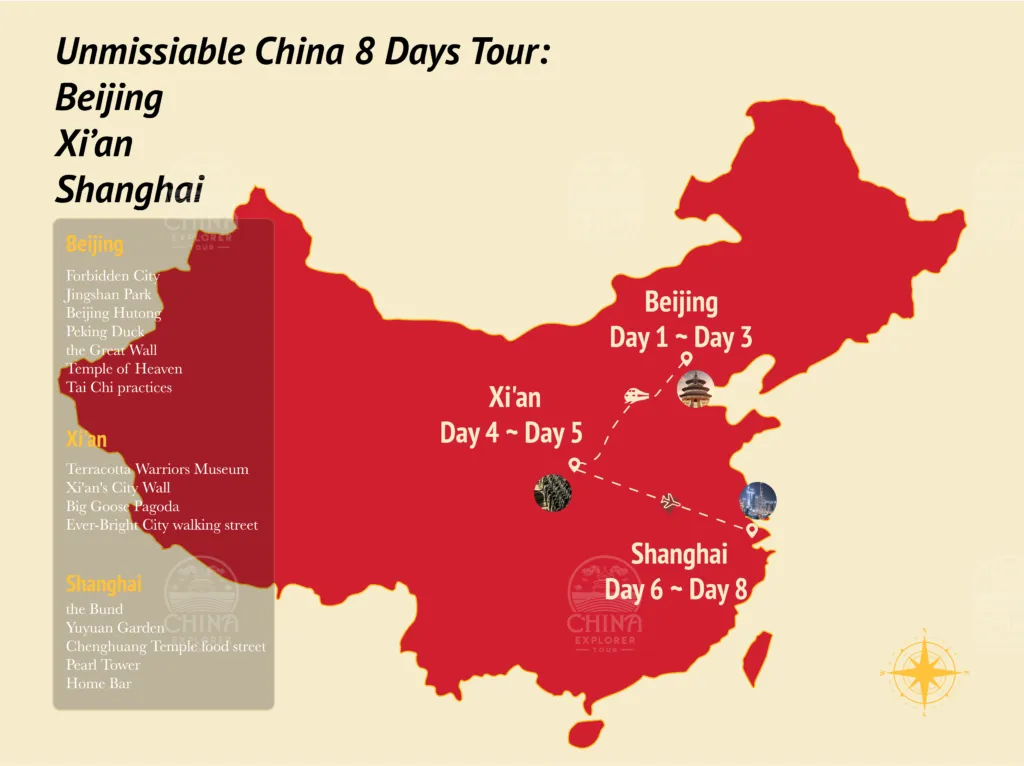
The "8 Days China Group Tours: Beijing, Xi'an, Shanghai" product costs $1,750. That price includes airport transfers, accommodations, an English-speaking guide, and entrance tickets. You get Peking Duck in Beijing and Biangbiang noodles in Xi'an. The group stays small at 8–16 people, so you never feel lost in a crowd.
The 14-Day Cultural Odyssey with China Explorer Tour
Want more variety? This route runs Beijing (3 days), Xi'an (2 days), Chengdu (3 days), Guizhou (3 days), and Shanghai (3 days). It's perfect for travelers who want history, food, pandas, and karst landscapes in one trip.

The "14-Day China Cultural Odyssey: From Iconic Landmarks to Hidden Gems" product costs $2,900. That covers all meals, accommodations, an English-speaking guide, and entrance tickets. If you want a middle-ground option, try the "Classic China 10 Days Tour: Beijing, Xi'an, Chengdu, Shanghai" at $2,180. It adds Chengdu's pandas without the Guilin extension.
Both routes include built-in free time. You can wander, shop, or simply sit in a teahouse. These are the places in china to visit when you want a stress-free introduction. Pick the length that fits your schedule, and let us handle the rest.
You don't need to see all of China on one trip. Pick three or four regions and go deep. That's how you find the best places in China to visit without burning out.
2027 is a great year to go. Visas are easier, digital payments work with your home cards, and new rail links connect the best places in China fast.
Not sure which of these places belongs in your first China itinerary? Tell us how many days you have, what you most want to experience, and the pace you enjoy. We can help you decide what to include, what to leave out, and how to connect the places you choose.
FAQ
Here are quick answers to the questions first-timers ask most.
What are the visa rules for 2027?
The visa-free transit policy now covers several countries for up to 10 days. US citizens can apply for ten-year multi-entry visas. Check the latest rules before booking non-refundable flights. Policies shift quickly.
When is the best time to visit?
Spring, April through May, feels perfect. Fall, September through October, works well too. Mild temperatures make sightseeing comfortable. Skip Lunar New Year unless you want massive crowds and higher prices.
Can I use my credit card and phone on the trip?
Yes. Alipay and WeChat Pay now accept international cards. Set them up before you fly. Download DiDi, Amap, and Trip.com for rides and rail tickets. Grab an eSIM for data. Install a VPN if you rely on Google or Instagram.
Do I need to speak Mandarin to get by?
No. Major cities show English signage everywhere. Metro apps and translation tools fill the gaps. Download Google Translate offline before you land. A local guide handles the rest. You'll manage fine with just English.